
Gravity Switch Wiki: Stages, Mechanics, Platforms
A Gravity Switch wiki for the 50-stage puzzler: how the slide rule works, what each five-stage block adds, playtime and the three platforms it shipped on.
Quick answer: Gravity Switch is a 50-stage arcade puzzler from ERMedia where your character slides in one direction until something stops it, so every stage is solved by choosing a launch order rather than steering. It released on November 26, 2026 for $7.99 on Steam (Windows), Nintendo Switch and PlayStation 5, and this wiki covers the rule set, the ten five-stage blocks, playtime and platform differences. Start with the stage 1 to 5 walkthrough→ if you are already stuck, or read the mechanics page→ first if you want the rule underneath every solution.
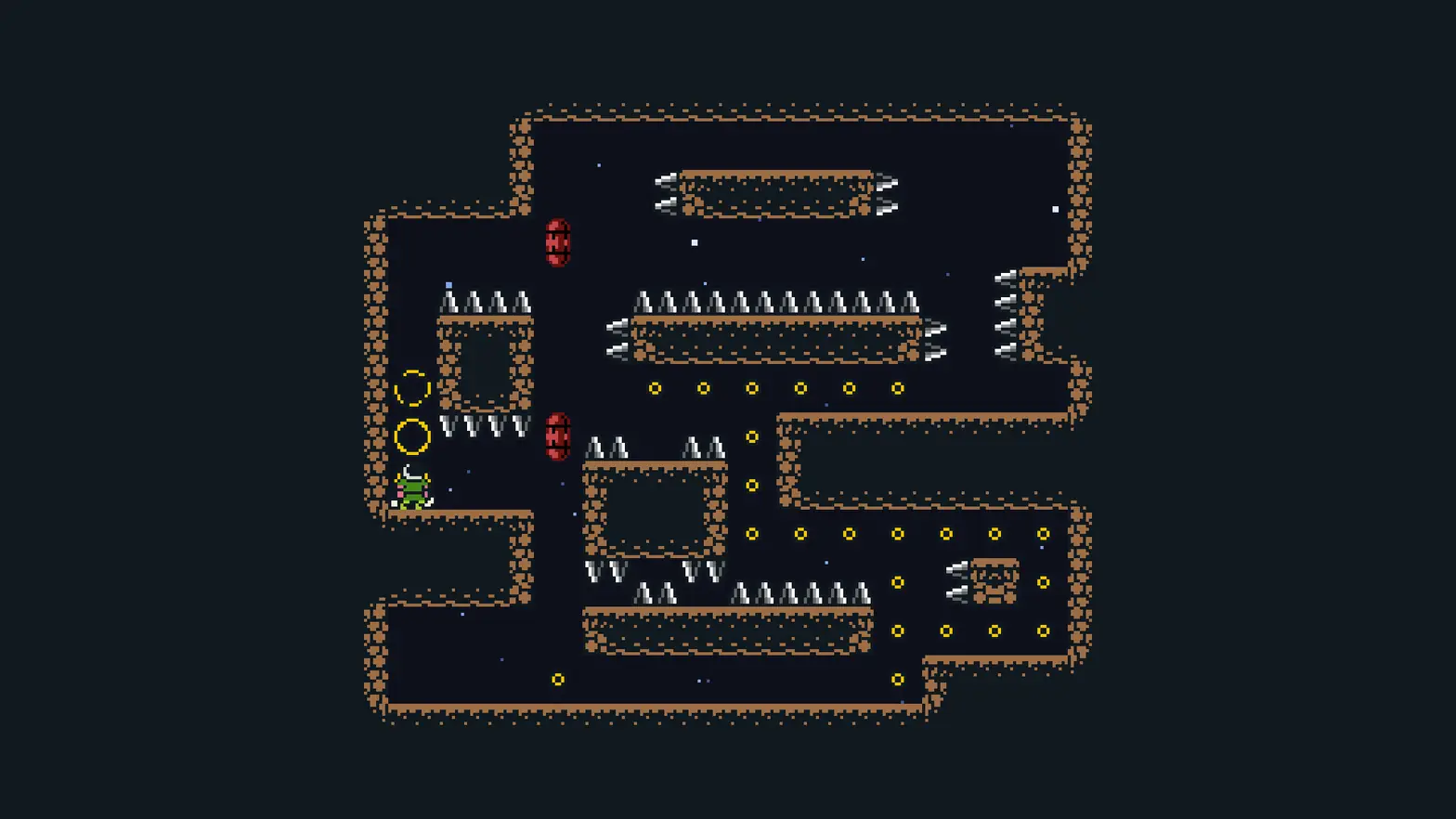
The premise is old arcade discipline dressed in a new palette: momentum is a commitment, not a nicety. You push a direction, the character accelerates until it hits a wall, a spike, a blade or a portal, and you live with the result. Clear every dot in the room and the warp crystal activates, which is the only way out.
What is Gravity Switch?
It is a single-player, hand-built stage game: 50 stages, no procedural generation, and a new environment every five stages. ERMedia is a two-person studio in Innsbruck, Austria (Ezekiel Rage and Thomas Koessler) with a catalogue of small, deliberately retro projects, and Gravity Switch continues that line: 12 chiptune tracks, instant restarts, full controller support, English-only text.
The three listings disagree on one detail worth knowing before you buy. Steam lists Plug In Digital as publisher; the Nintendo eShop page lists Brainium Games. The developer is ERMedia on all three. That split is normal for small European indies and it does not change the game, but it does explain why the store copy and the screenshots are worded differently on each platform.
| Fact | Value |
|---|---|
| Developer | ERMedia |
| Release date | November 26, 2026 |
| Stages | 50, in ten environments |
| Price | $7.99 (Steam, Switch) |
| Steam App ID | 5345620 |
| PS5 product ID | PPSA40459 |
| Switch title ID | 70010000142131 |
| Players | 1 |
How the slide rule actually works
Four behaviours explain almost every failure in the game:
- A push is a commitment. There is no analog nudge and no brake button. Once the character moves, it travels to the next solid tile.
- The wall decides, not you. What stops you can be a wall, a spike (which kills), a saw blade (which kills), a portal (which relocates you) or a crystal gate.
- Portals keep your direction. Entering a portal mid-slide drops you out facing the same way, so a portal is a shortcut, never a reset.
- Dots are the lock, the crystal is the door. The crystal stays inert until the room is empty of dots, so a fast route that skips one dot is a wasted route.
The mechanics guide→ breaks these four down with the corner cases that matter, including what happens when a portal spits you out one tile from a spike wall.
Gravity direction is a property of the room, not of your momentum. Decide which surface you want to travel along, flip, then push. Trying to flip mid-slide is the single most common cause of a restart in the first ten stages.
What the ten blocks add
Every five stages the art changes and so does the hazard set. The developer's own description lists the escalation in one line: spike traps, moving blades, portal pairs and narrow escape lanes arrive as the environments change. The table below is our reading of how those four ideas are layered across the ten blocks, not an in-game zone list with names.
| Block | Stages | What the block leans on |
|---|---|---|
| 1 | 1 to 5 | Slide, walls, dots, crystal |
| 2 | 6 to 10 | Longer slides, spike edges |
| 3 | 11 to 15 | Gravity flips as a routing tool |
| 4 | 16 to 20 | Portals in the middle of a slide |
| 5 | 21 to 25 | Narrow escape lanes between spikes |
| 6 | 26 to 30 | Crystal rooms with several approaches |
| 7 | 31 to 35 | Blade timing windows |
| 8 | 36 to 40 | Longer portal chains |
| 9 | 41 to 45 | All four hazards in one room |
| 10 | 46 to 50 | Final gauntlet, no new mechanics |
Inference source: the ten-block split comes from ERMedia's "new environments unlock every 5 stages" line; the per-block emphasis above is our reading of the progression from the official screenshots and the stage order.
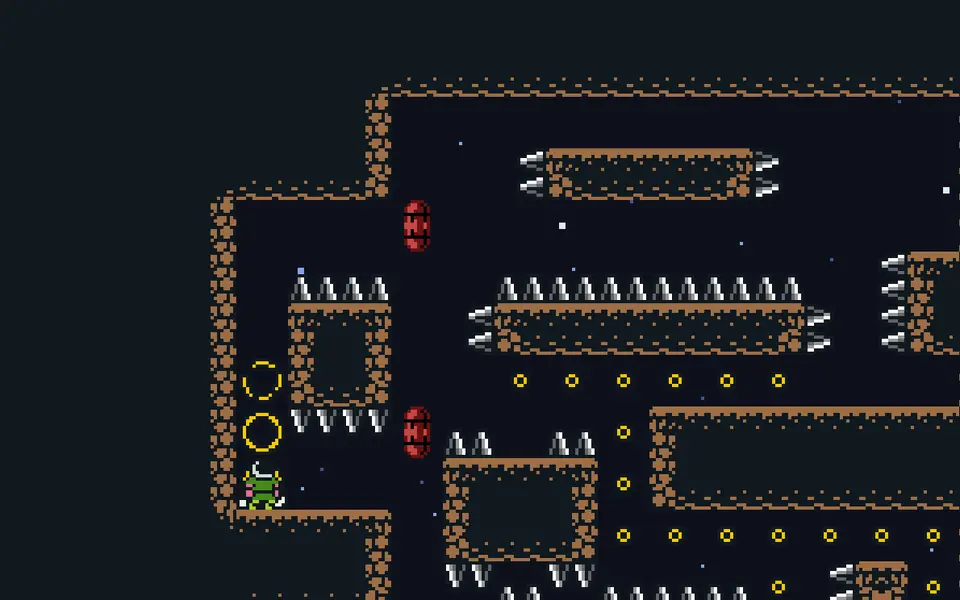
The how many levels→ page has the full block list with the dot-and-crystal structure spelled out, which is the reference I keep open while playing.
Which version should you play?
The three releases are content-identical as far as the store pages describe them. The differences that matter in practice:
- Steam is Windows-only, English-only, $7.99, and has no achievements. The community stats page returns "No stats are available at this time", so there is nothing to chase beyond finishing the 50 stages.
- Switch is the portable one: 269 MB, TV/tabletop/handheld modes, nine languages, ESRB E with mild fantasy violence, cloud saves through Nintendo Switch Online, and it runs on Switch 2 with unchanged behaviour.
- PS5 (PPSA40459) shipped the same day. Sony's US store page would not resolve for us at launch, so we cannot quote a regional price for it; check your own store.
If you only want one purchase and you play on a TV, Steam or PS5 are equivalent. If you want it on a commute, the Switch version is the reason the game works: five-minute blocks fit the stage length almost exactly.
Official source: Steam store page ↗ and the Nintendo eShop listing ↗ for price, languages and modes; the PlayStation Store page ↗ for the PS5 product ID.; ERMedia ↗ for the developer's release history.
Where to start reading
If you are brand new, read the beginner tips→ page, which is nine habits rather than nine tricks. If you are stuck on a specific block, jump straight to the walkthrough for that block: they are written as methods, because the dot layout changes from stage to stage but the room logic does not. If you are deciding whether to buy, the release date and platforms→ page compares the three storefronts in one table.
FAQ
Is Gravity Switch a puzzle game or an arcade game?
Both, and the store tags it as both (Casual, Indie). The puzzle is the route; the arcade part is that a mistimed push kills you instantly and the restart is instant.
How many stages does Gravity Switch have?
50, split into ten environments of five stages each. There is no endless mode and no level editor.
Does Gravity Switch have achievements or trophies?
The Steam version does not: its stats page returns no achievements. PlayStation and Switch have their own platform-level systems, but neither store page publishes a list at launch.
Is it local co-op?
No. Every store page lists one player, and the puzzle design assumes a single character.
Does it work on Steam Deck?
There is no separate Deck rating on the store page, but the game is a 2D sprite puzzler with full controller support and no mouse input, so it is a low-risk Deck title.