Gravity Switch Stage 21 to 25 Walkthrough
Gravity Switch stages 21 to 25 add moving blades. How to read a cycle, when a blade is a wall and when it is a window, and how to clear the desert block.
Quick answer: block five introduces moving blades, and the block is built to teach one sentence: a blade is a wall that opens on a timer. Every room here is solvable by watching one full cycle before you push, then choosing whether you need the blade to be closed (as a stop) or open (as a lane). If the timing still feels random, the hazards page→ explains why it is not.
The three blade rules
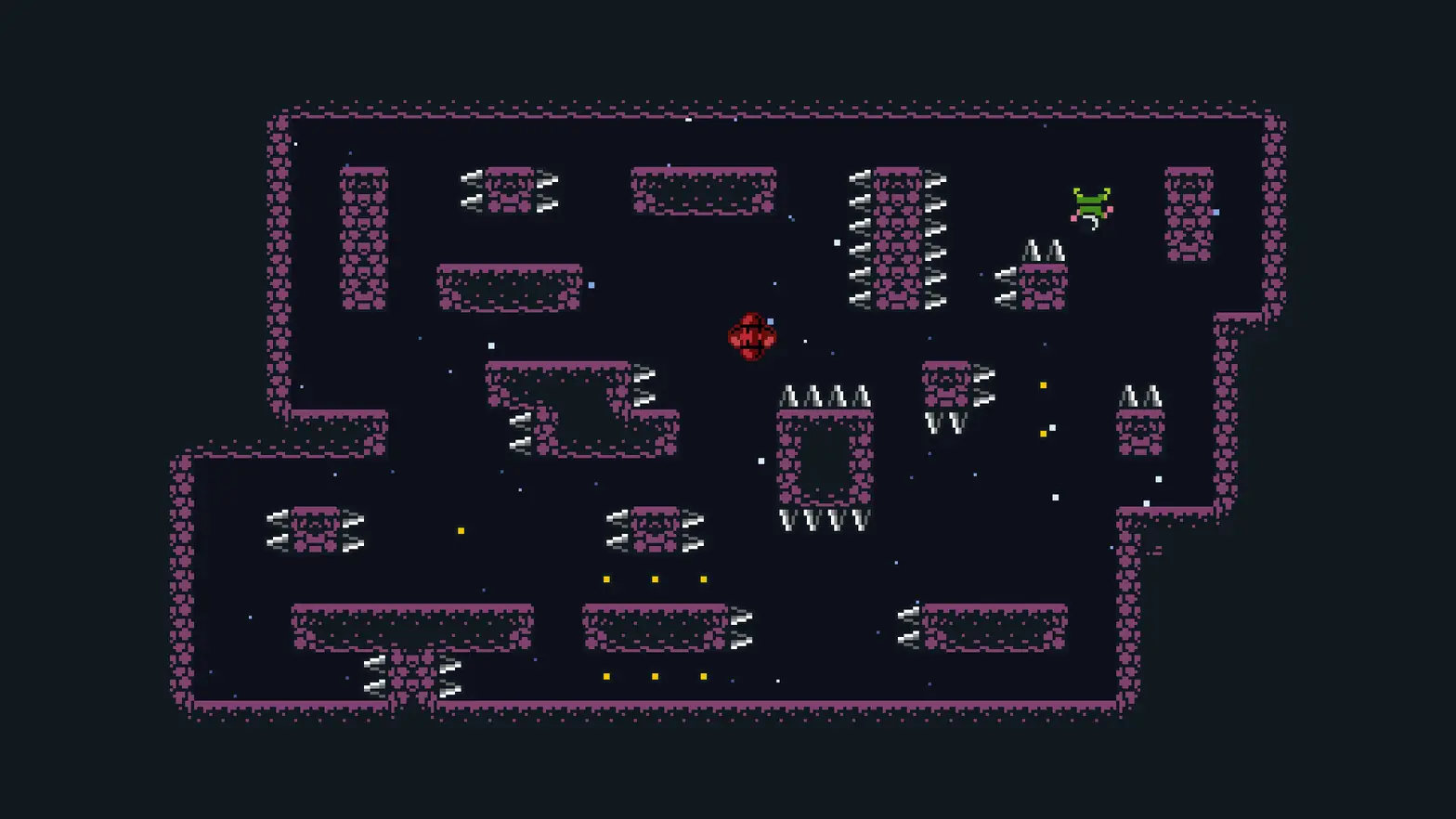
- A blade's track is not a wall. You can slide past a blade's housing as long as the blade is not on your lane.
- A blade can stop you. A blade sitting in your lane ends the slide the same way a wall does — and if it is moving toward you, it ends the attempt.
- Cycles are fixed. Blades do not randomise, so a death is always information. The cycle you watched on the last attempt is the cycle you get on this one.
That third rule is why the desert block is more forgiving than it looks. Unlike a reflex game, you are never asked to react to something you have not already seen.
| Stage | What it is testing | The mistake to avoid |
|---|---|---|
| 21 | One blade crossing one lane | Pushing just before it arrives |
| 22 | A blade used as a stop | Passing the lane entirely |
| 23 | Two blades out of phase | Treating them as one obstacle |
| 24 | A blade row with a gap | Aiming at the gap too early |
| 25 | Blades plus a portal | Using the portal while a blade sits on the exit line |
Stage 21: the first blade
One blade crosses one lane, and one dot sits on the far side of that lane. The mistake is pushing the moment the blade moves away, because the blade's travel is slower than the slide and will catch you mid-room.
Watch the cycle. Push as the blade passes your entry lane, not as it leaves your entry point. The difference is about half a second, and it is the whole stage.
Stage 22: blade as a stop
Stage 22 asks you to use a blade deliberately: a dot sits one tile before a blade's lane, and the blade's closed position is the only thing that stops a slide short enough to land on it. Pass the lane and you overshoot into a spike edge.
This is the stage that reframes blades from "hazard" to "obstacle with two states". Once you accept that, the rest of the block reads faster.
A blade follows its own track and nothing else. Your position never changes its timing, so a cycle you learned in stage 21 still works in stage 40.
Stage 23: two blades out of phase
Stage 23 puts two blades on parallel lanes with different phases, and the room only opens when both are away from the middle at the same time. There is a window, and it is shorter than either blade's own gap.
The practical method: watch both from a safe tile until you see the moment both are clear, then push on the next repetition rather than the first one you notice. The first observation is usually a coincidence; the repetition confirms it.
Stage 24: the gap in the row
A row of blades with a single gap is the block's iconic room, and it punishes greed. Aiming at the gap from across the room means your slide passes three blade lanes before it gets there, which is three chances to be caught.
The route that works approaches the row along its length, entering the row already inside the gap's lane, so the blade lanes are crossed one at a time with a stop between each.
Stage 25: blades and a portal
The last room of the block combines the portal from block three with a blade row. The portal's exit line crosses a blade lane, so the portal is only safe while the blade is away from that line.
Use the portal last, after the blades' room half is cleared, and time the entry so the exit lands in the blade's gap. If you use it first you will exit into the row with the dots still uncollected.
Block pacing
Twenty-five to thirty-five minutes on a first run, and most of it is waiting for cycles rather than failing. Players who try to push through the timing without watching finish this block in an hour and enjoy it less.
The stage 26 to 30 walkthrough→ moves into the crystal halls, where the rooms get wider and the blade rows longer. The beginner tips page→ has the restart habit that this block punishes you for skipping.
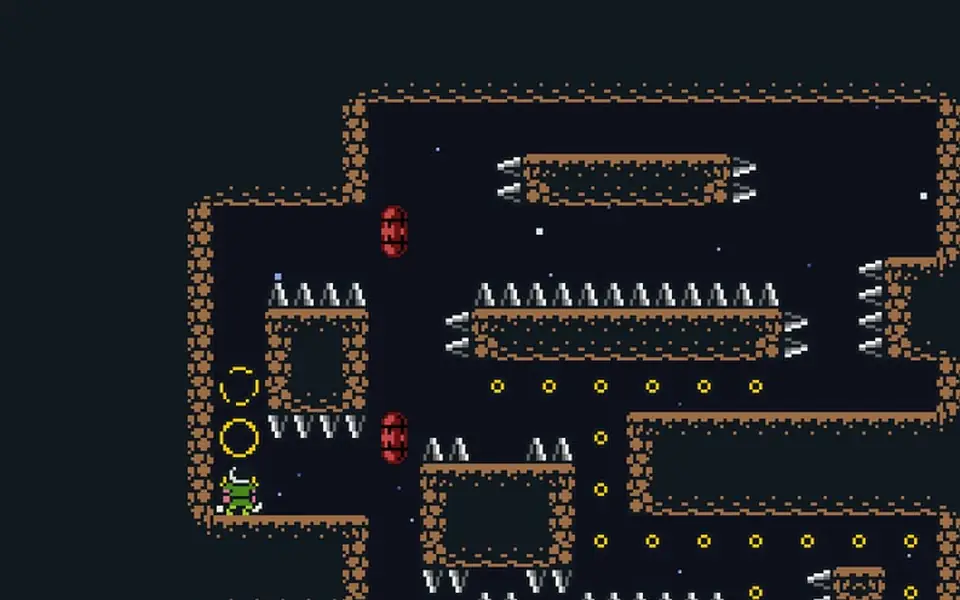
Inference source: these notes follow the block's hazard progression and the official desert screenshots, which show a column of red saw blades along the room edge. No replay export exists, so routes are described as timing logic rather than frame data.
Official source: Steam store page ↗ for the moving-blade hazard and the every-five-stages environment change; Nintendo eShop listing ↗ for the Switch version.; the PlayStation Store listing ↗ for the PS5 release; ERMedia ↗ for the developer's release history.
FAQ
When do blades appear in Gravity Switch?
From the fifth block onward, starting at stage 21.
Are blade timings random?
No. Each blade follows a fixed cycle, so a death always tells you when not to push.
Can a blade stop my slide?
Yes. A blade in your lane acts as a stop, which some rooms require you to use.
How long should I watch before pushing?
One full cycle is enough for a single blade; two repetitions for a pair, because the first clear window you notice is often a coincidence.
Why do I keep dying on stage 24?
Because the approach crosses several blade lanes. Enter the row along its length and cross one lane at a time.